 Brandeet
Website Builder Alternatives for Small Businesses in 2026
Looking at website builder alternatives in 2026? See what small businesses actually need beyond a drag-and-drop site.
- website builders
- small business websites
- digital presence
- website comparison
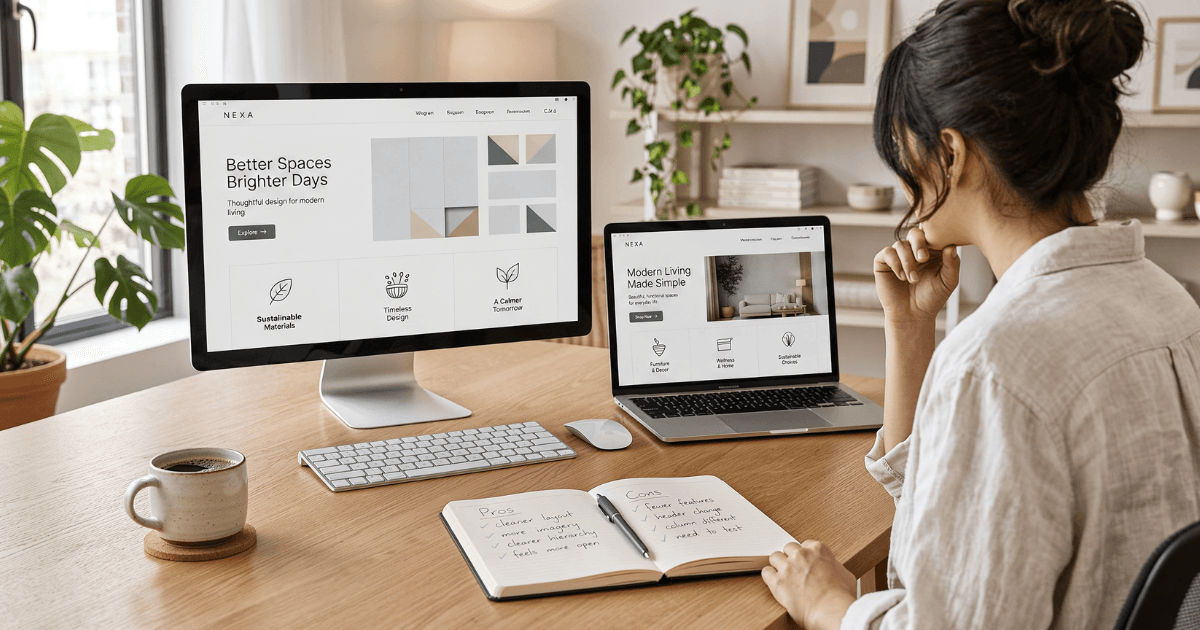
You signed up for a classic website builder two years ago. You dragged some blocks around, picked a template, and launched. Now it's 2026, the design looks dated, your social posts still get copied over by hand, and every time a customer asks for a booking you're emailing back and forth to find a slot. The website did its job. It just didn't do the rest of the job.
That gap is exactly why more small business owners are looking at website builder alternatives this year. Not because the builders got worse, but because a website on its own was never going to cover marketing, content, bookings, and reviews too.
What a classic website builder actually gives you
A drag-and-drop builder gets you a page online fast. Pick a template, swap the photos, write your text, publish. For a one-page business card site, that's often enough.
The catch shows up a few months in. You still need a separate tool for social media scheduling, another one for email marketing, a form somewhere to collect leads, and a notebook or spreadsheet to track bookings. The website became one tab among six.
Where the gap really hurts small businesses
Most PMEs don't have a marketing team. The same person who builds the site is usually the one answering Instagram comments, writing the next post, and chasing a client who asked for a quote last week.
When every one of those jobs lives in a different app, things slip. A lead comes in through the contact form and never gets followed up. A booking gets double-entered or missed entirely. Posts go out less often than planned because scheduling takes longer than it should.
What to actually look for instead
Rather than comparing builders feature by feature, it helps to ask a simpler question: how many separate tools would I need to run my whole online presence? A good alternative should cover, in one place, a fast and SEO-friendly website, a way to plan and publish content on social media without jumping between apps, a simple system for leads and bookings, and basic performance data so you know what's working.
This is the gap Brandeet was built to close. Instead of a website builder plus four other subscriptions, Brandeet gives small businesses one platform for the site, the content calendar, automatic publishing to social media, bookings, lead capture, and analytics.
Making the switch without losing ground on Google
If you already rank for a few keywords, moving platforms can feel risky. The safest approach is to keep your URLs and page titles as close as possible to what you had, set up redirects for anything that changes, and resubmit your sitemap to Google Search Console once the new site is live.
Done carefully, switching doesn't mean starting your SEO from zero. And with Brandeet, your Google Business Profile is managed inside the same platform as your new site, so your business details stay consistent everywhere Google looks.
Before you commit to another year with a tool that only covers the website, it's worth a quick look at what a platform like Brandeet can take off your plate. Sometimes the right alternative isn't a better builder. It's one less tool to manage altogether.